Best Solar Company in Pakistan: 2026 Buyer’s Guide
Choosing the best solar company is now one of the biggest household and business decisions in Pakistan. Grid tariffs keep climbing, load-shedding has not disappeared, and net metering rules have shifted again. A good installer can cut your bills for 25 years. A poor one can leave you with a leaking roof, a dead inverter, and no one to call.
This guide explains how to judge an installer in 2026, what to ask before signing, and which red flags to walk away from. For a sense of what a full-service installer looks like, review the profile of Best Solar Company and measure other firms against it. The advice here comes from the kind of site visits and quotation reviews that homeowners in Lahore, Karachi, and Islamabad go through every week.
Why the Best Solar Company Matters More Than the Cheapest Quote
Solar hardware has become a commodity. Tier-1 panels from the same factories reach almost every installer at similar prices. What differs is design, workmanship, and after-sales support.
Consider two quotes for a 10 kW system. One is Rs. 150,000 cheaper, but it uses thin mounting structures, undersized DC cables, and an inverter with no local service centre. After one monsoon season, the frames rust and the cables overheat. The savings vanish quickly.
Pakistan’s solar boom has also attracted many part-time operators. According to the International Renewable Energy Agency, solar photovoltaic costs have fallen by more than 80 percent in the last decade. That price drop is exactly why quality control matters: with thin margins, some firms cut corners you cannot see from the ground.
What Does a Reliable Solar Company Actually Provide?
A dependable installer handles far more than panel delivery. Look for these services in writing:
- Site survey: shading analysis, roof load check, and orientation review before any quote.
- System design: panel count, string layout, inverter sizing, and battery capacity matched to your real load.
- Licensed installation: trained electricians, proper earthing, surge protection, and DC isolators.
- Net metering paperwork: application, DISCO inspection, and bidirectional meter coordination.
- After-sales service: cleaning plans, remote monitoring, and a named support contact.
If a firm skips the survey and quotes over WhatsApp from a monthly bill alone, treat it as a warning. Good design needs roof measurements and load data, not guesses.
How to Compare Solar Companies: A Practical Checklist
Use the same checklist for every installer you shortlist. Scoring each company side by side removes the pressure of sales talk.
1. Verify experience and completed projects
Ask for addresses of three installations that are at least two years old. Visit one if possible. A system that still looks tidy after two summers tells you more than any brochure.
2. Check equipment brands and warranties
Panels should carry a 12-year product warranty and a 25-year performance warranty. Inverters usually carry 5 to 10 years. Confirm who honours the warranty locally, because a foreign manufacturer’s promise means little without a Pakistani service partner.
3. Read the quotation line by line
A proper quote lists panel wattage and model, inverter model, cable sizes, structure material and thickness, breakers, and earthing. Vague phrases such as “complete system” hide substitutions.
4. Ask about net metering support
The regulator, NEPRA, publishes the rules for distributed generation and net metering. A capable installer knows the current procedure, expected approval times, and the documents your DISCO will ask for.
Sample Comparison: What Different Quotes Often Look Like
The table below shows typical differences between a careful installer and a bargain operator for a 10 kW grid-tied home system in 2026. Figures are indicative and vary by city and brand.
| Item | Quality-focused installer | Bargain operator |
|---|---|---|
| Site survey | On-site, with shading report | Phone quote only |
| Panels | Tier-1, 550-620 W, named model | “Branded,” model unstated |
| Structure | Hot-dip galvanised or thick aluminium | Thin painted iron |
| Earthing and surge protection | Included, tested | Often omitted |
| Net metering help | Full file handling | “Customer’s responsibility” |
| Service after sale | Scheduled visits, monitoring | Phone number only |
Notice that the real gap is not the panel itself. It is the unglamorous parts: structure, earthing, protection, and paperwork.
Understanding Solar Products in Pakistan Before You Buy
Before comparing companies, understand the main product categories. The market for solar products in Pakistan now covers monocrystalline panels, hybrid inverters, lithium batteries, mounting hardware, and monitoring devices. Each choice changes cost and performance.
- Mono PERC and N-type panels: N-type modules lose less power in heat, which suits Pakistani summers.
- Hybrid inverters: they run on solar, battery, and grid, and keep essential loads on during outages.
- Lithium iron phosphate batteries: they last longer than lead-acid units and tolerate deeper discharge.
- Smart monitoring: an app showing daily generation helps you catch faults early.
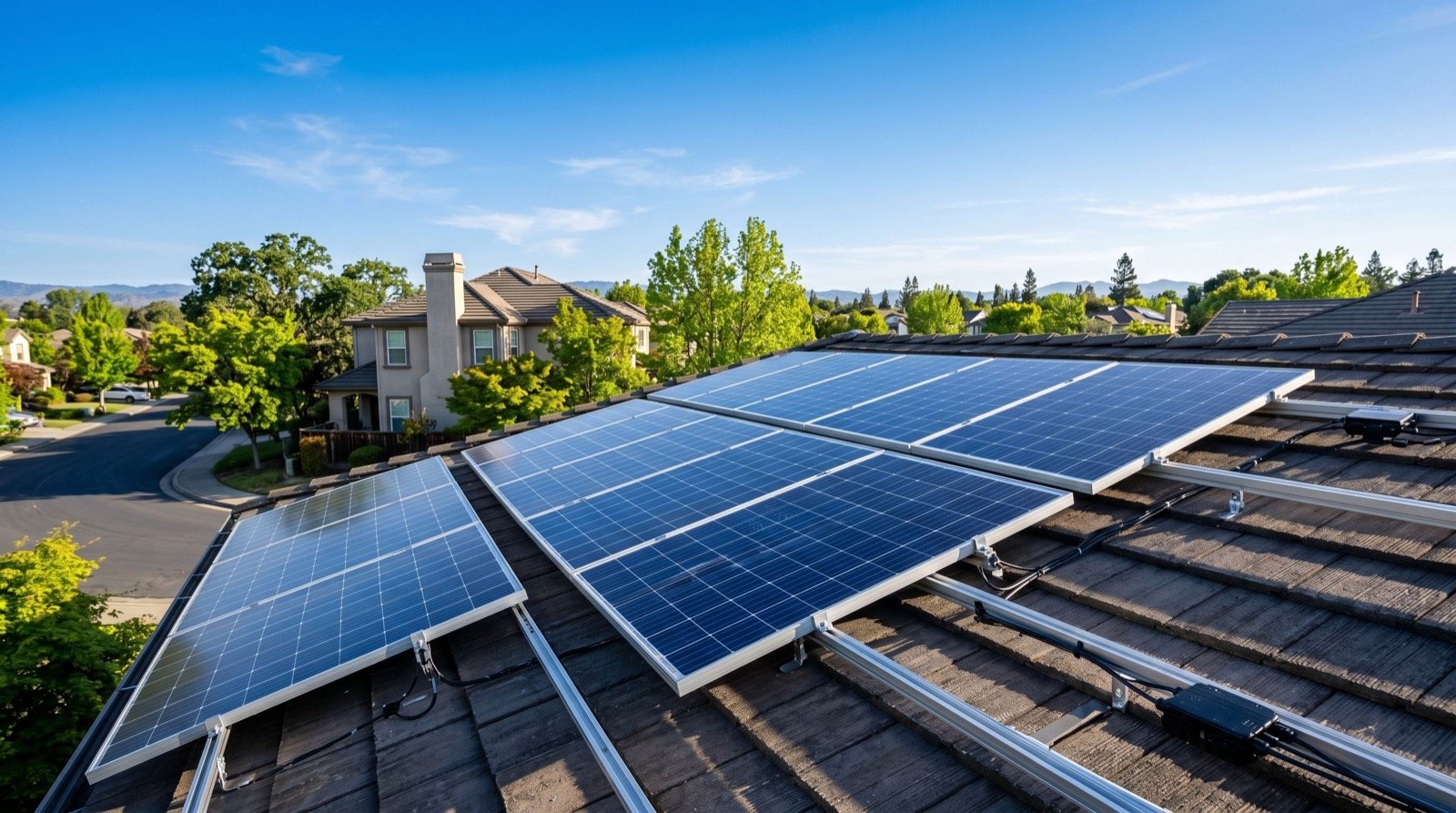
Original tip: photograph your own roof at 9 am, noon, and 4 pm before any surveyor arrives. Shadows from water tanks, parapet walls, and neighbouring buildings are easy to see in those three shots. You can then check whether the installer’s design accounts for them.
Common Red Flags When Choosing an Installer
Several warning signs appear again and again in complaints from buyers.
- Demands for full advance payment before any survey or contract.
- Promises of “zero electricity bill forever” without discussing fixed charges and taxes.
- No written warranty terms or a refusal to name the panel and inverter models.
- Pressure to sign the same day because “the dollar rate is rising.”
- No physical office, or an address you cannot verify.
Payment terms deserve special attention. A sensible schedule is a modest advance, a second payment on material delivery, and a final payment after commissioning and net metering approval.
How Much Does a Good System Cost in 2026?
Prices fluctuate with exchange rates and import duties, so treat any figure as a range. A typical grid-tied 5 kW home system in Pakistan often falls between Rs. 600,000 and Rs. 850,000, depending on brand and structure. Hybrid systems with lithium storage cost considerably more.
Payback commonly lands between two and four years for households with monthly bills above Rs. 40,000. Lower bills stretch that period. Ask your installer to show the payback calculation using your actual units consumed, not a generic average.
The National Renewable Energy Laboratory offers free tools and research that explain how orientation, tilt, and temperature affect output. Reading a little of it makes you a sharper buyer.
Frequently Asked Questions
How do I know I have found the best solar company for my home?
The best fit is the one that surveys your roof in person, quotes named equipment, gives written warranties, and handles net metering. Check references from installations at least two years old. Price should be the last filter, not the first.
Is a bigger solar system always better?
No. An oversized system wastes money if your net metering export rate is low and your daytime consumption is small. Size it to your annual units, roof area, and budget instead.
How often does a solar system need maintenance?
Panels need cleaning every two to four weeks in dusty cities. A technician should inspect connections, earthing, and inverter logs at least once a year.
Can I add batteries later?
Yes, if you choose a hybrid-ready inverter now. Ask the installer to confirm battery compatibility in writing so a later upgrade does not require replacing the inverter.
Final Thoughts
The best solar company is the one that treats your roof as an engineering project, not a quick sale. Compare surveys, equipment lists, warranties, and service plans on the same checklist, and walk away from vague quotes. If you want guidance from dependable specialists on budgeting a big household move or upgrade, start with that resource, then request site-visit quotations from at least three solar firms.
Ready to take the next step? Book a site survey, compare written proposals, and choose the installer who earns your trust in 2026.